
June 17 – Eco Divina: Praying with Nature
God writes the gospel not in the Bible alone, but on trees and flowers and clouds and stars. Martin Luther
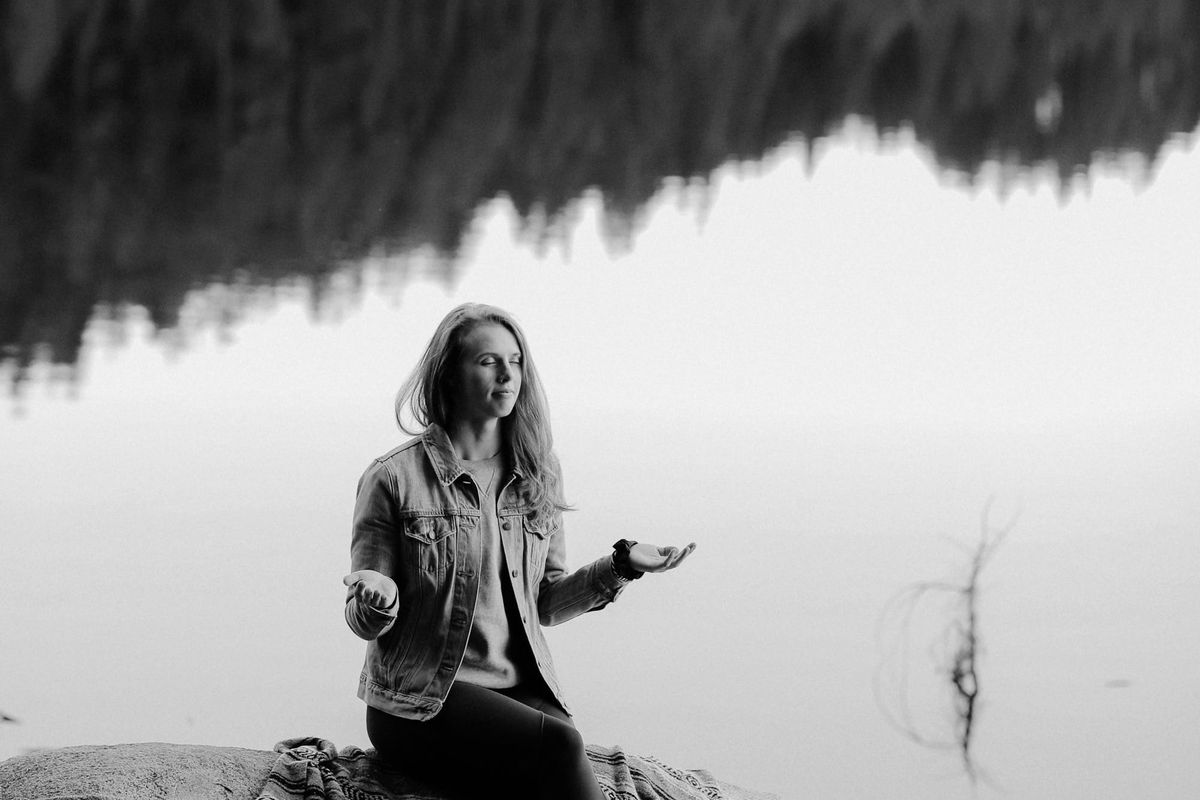
Gregg’s Reflection
Reverence is about seeing the Sacred in something. We practice reverence with nature when we honor the ways she reveals the Divine Presence to us.
Christine Valters Paintner
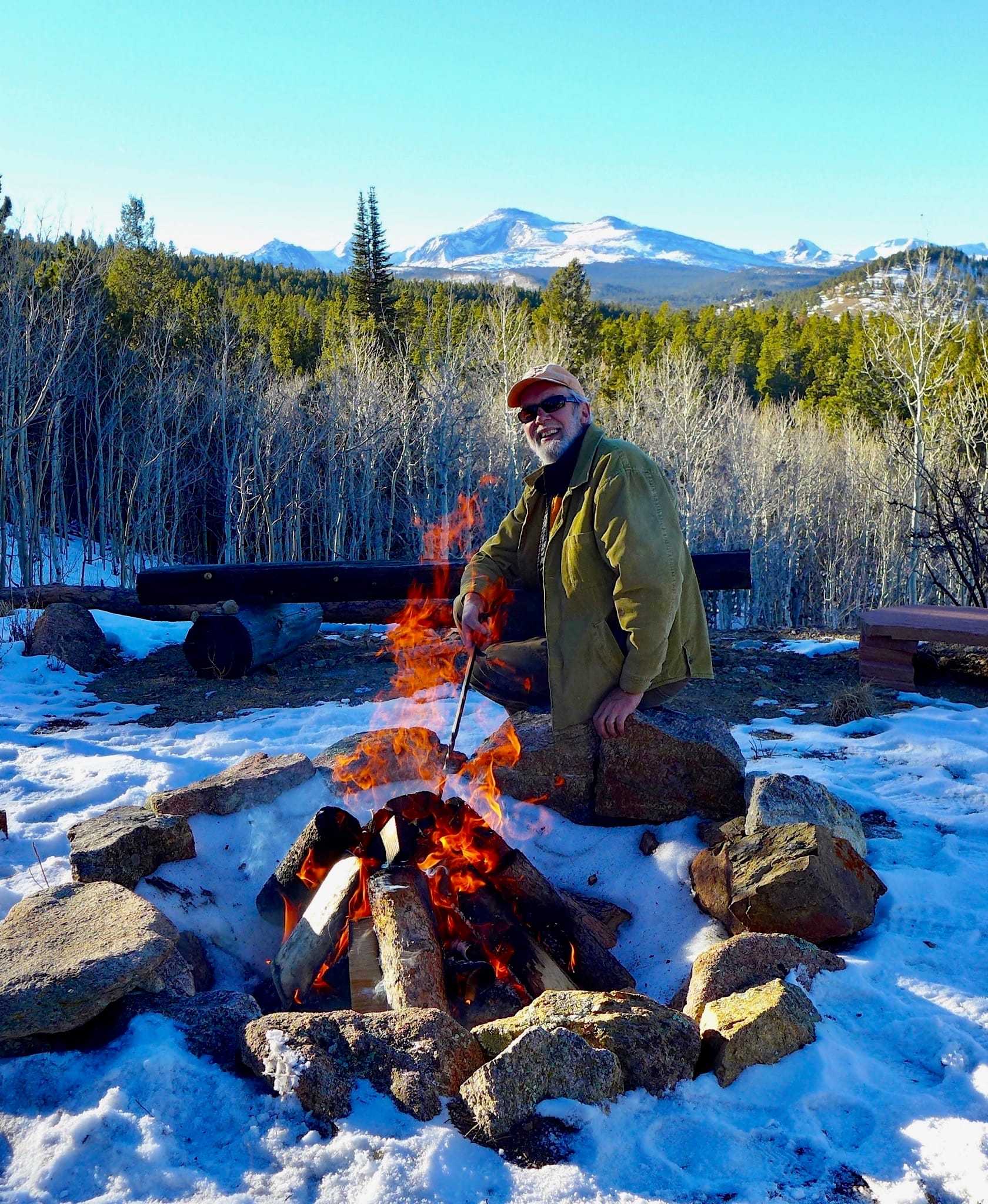
We’ve spent hours contemplating nature from our fire pit
Eco Divina is praying with nature. It is a creative way of connecting with God, especially when we are in a beautiful landscape—along the sea, in a park, or in the woods. Often our prayer becomes dry because we do not connect to God in creative ways. Eco Divina is another way of practicing awareness of God’s presence or seeing God in all things. If in Lectio Divina we pay attention to words and phrases that stand out as we read a scripture passage, in Eco Divina we heighten our senses to take in nature and meet God.
Sense of sight. We observe every flickering of the leaves, the ripples and waves, the grandeur of mountains. We savor God’s enormity, capacity, and generosity.
Sense of hearing. We hear the birds chirping, the wind whistling, the yipping of a coyote.
Sense of smell. We notice the odors around us like the smell of the earth, the smell of a flower, the smell of freshly cut grass.
Sense of touch. Feel the water as you dip into the sea or river. Feel the freshness and softness. Allow this sensation to refresh your tired body. Immerse in the water and allow it to take your weight.
Sense of taste. This sense generally has to do with food. Allow your palate to speak to you. Some say that certain food can give you ecstasy as you savor the different flavors. This can be a form of soul care.
Jim Finley once described it this way: “Look at the forest, and then let your gaze be drawn to a single tree. Notice it is not perfect…” Eco Divina invites that same shift in awareness — to look closely, to embrace imperfection, and to see the Divine woven into creation’s every detail.
The practice of Eco Divina involves two essential disciplines: openness and capacity to be with nature. All our senses are awakened to an openness that allows us to receive God.
Lita Quimson-Feliciano, NewEdenMinistry.com
Scripture
The earth is the Lord’s, and everything in it, the world, and all who live in it.
Psalm 24:1
For since the creation of the world God’s invisible qualities—his eternal power and divine nature—have been clearly seen, being understood from what has been made.
Romans 1:20
Let the fields be jubilant, and everything in them; let all the trees of the forest sing for joy.
Psalm 96:12
Ancient Quotes
God writes the gospel not in the Bible alone, but on trees and flowers and clouds and stars.
Martin Luther
Modern Quotes
Reverence is about seeing the Sacred in something. We practice reverence with nature when we honor the ways she reveals the Divine Presence to us.
Christine Valters Paintner, The Soul’s Slow Ripening, p. 98
Look at the forest, and then let your gaze be drawn to a single tree. Notice it is not perfect — it has knots and bends. And then you realize you are seeing what God looks like in a tree.
James Finley, teaching on contemplative awareness
In silence, we find the space where everything is alive and communicating, waiting for us to notice.
Rick Rubin, The Creative Act: A Way of Being, p. 72
Art, music and time in nature provoke awe and wonder, moving us from our head to our heart, where we can connect with God. The Cloud of Unknowing tells us, “For He can well be loved, but he cannot be thought. By love he can be grasped and held, but by thought, never.”
Journaling Prompts
- When you walk in nature, what do you notice first? How does it draw you into God’s presence?
- Think of a single tree, stone, or flower you’ve observed closely. What did it reveal to you about the nature of God?
- How might you practice opening all your senses to encounter God more deeply in the natural world?
👉 Go deeper into this week’s theme:
Read the full Week 24 Reflection: Lectio/Audio/Visio/Eco Divina