
Leadership: Imposter Syndrome
Ever feel like you’re an impostor, who’s bluffing their way through life? You’re not alone. Even the world’s most brilliant minds suffer from the fear of being ‘found out’. Elizabeth Bennett

Gregg’s Reflection
“I am not a writer . I’ve been fooling myself and other people,” wrote John Steinbeck in his private journal when he was working on The Grapes of Wrath. You might think he was simply experiencing momentary self-doubt but, I see a hint of something more insidious, which plagues many people of great intellect and erudition: impostor syndrome. For many of these high achievers, the more plaudits they receive, the more they worry that they’re putting one over on everyone.
Arthur C. Brooks wrote in an article entitled Three Ways to Stop Feeling Like an Imposter. He goes on to say,
A number of tests have been validated for impostor syndrome. One is the Clance Impostor Phenomenon Scale, which asks respondents whether they agree with such statements as “I’m afraid people important to me may find out that I’m not as capable as they think I am.” (You can get an idea of how you score on the scale by using a slimmed-down online survey.)
His three ways are:
Don’t talk to yourself like someone you hate. Just as you wouldn’t tell your spouse or your child that they’re an incompetent idiot, you should avoid speaking that way to yourself.
Track your accomplishments. Try framing your activity as an opportunity for growth and learning. Keep an account of your personal progress to create an objective record of your momentum
Get some company. Building or joining a community of people similarly situated professionally can be very helpful. This provides a peer group with whom you can speak frankly about any insecurities
I first heard of Imposter Syndrome as I studied theories of leadership in my EMBA. As soon as I saw the term, I knew I had lived in that space for two decades. With an older brother who graduated from Vanderbilt and a younger sister who graduated from Duke, I was a dropout with smarter siblings.
Joining the family business, I wasn’t penalized for not having a degree, but I still felt the lack. The subtle message I got from my father was Not Good Enough. Every time I fell short of the perfection he chased, the idea was reinforced. I pushed myself to perform, but perfection is not an option, despite it being embraced by so many. Each accomplishment gave momentary relief, but an hour later, I was back chasing the next goal.

ChatGHP defines it this way:
Impostor syndrome is the persistent belief that one’s achievements are undeserved and that one is likely to be exposed as a “fraud,” even in the face of objective success.
Common Among:
High-achievers
First-generation professionals or students
Minorities in dominant cultural or corporate environments
Creatives, academics, and entrepreneurs
I definitely had difficulty accepting praise or recognition. When I would get praise, my response was, “I’ve been working for years to give the illusion of substance.” People would chuckle at my self-deprecating humor, but I was speaking the God’s honest truth.
My work with Robert Fritz uncovered my structure, and I recognized the lie that it rested upon. I had thought for years I was trying to prove myself to my long-dead father, but in my session I realized I was trying to prove myself to God. Fritz asked, “Is that how your religion works?” I realized I had an operating system that was completely at odds with the Lutheran theology of Salvation by Grace. In trying to prove myself worthy to God, I was bound to fail. God has no desire to prop up the idea that I can do this in my strength, and let me hit the wall time and time again until I got the message.

My dear friend and psychologist Dr Harvey Cheatham put it this way.
Idea: Made in the image of God, not good enough,
Ideal: Standard I need to live up to,
Idol: Prove myself worthy,
False Identity: Idea that I can prove myself. Shoals that shipwreck faith. We work for renewal, but mostly suffer.
The ego is a fragile thing, and we expend massive amounts of energy propping up our ego, or our False Self, as Richard Rohr, Thomas Keating and Thomas Merton would say. (See my post on False Self/True Self here,) As we live into True Self, we can let go of the need to prop up our ego. Beatrice Bruteau says it beautifully,
Receiving Unconditional Love
The effect of accepting this love is a whole new image of oneself, other persons, and the way the world is structured. To be loved so profoundly and so securely, beyond all the circumstances of one's conditions and qualities, satisfies the deepest longings of the human heart and, therefore, releases the energy that had been committed to the tasks of defending and augmenting oneself.
I have never lived completely free of my structure, which left me in obligation to a judgmental God. But, I am living more and more into freedom from the need to prove myself.
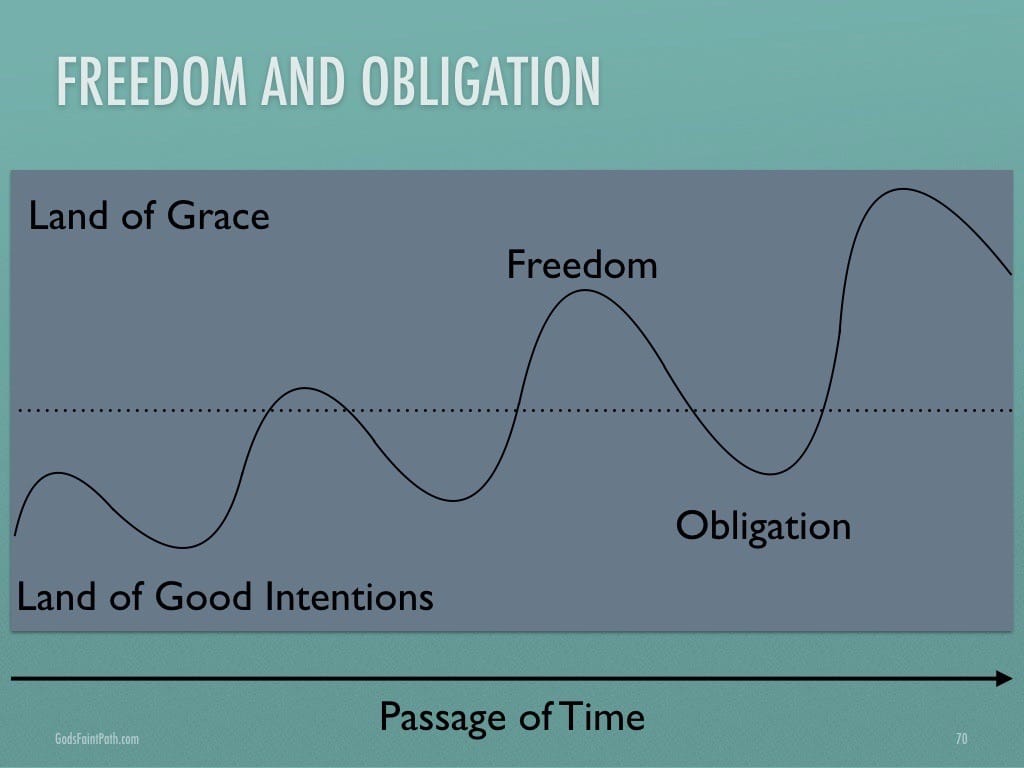
So, come along with me into understanding the Imposter Syndrome and how you might move beyond it in your life and career. Blessings.
Journaling Prompts
When did I first become aware of the voice that says, “Not good enough”? Whose voice is it really? What accomplishments do I tend to dismiss or minimize? Why What do I believe I must prove—to others, to God, to myself? In what ways have I confused worthiness with performance? How would my life look different if I truly believed I am loved and accepted just as I am? What roles has perfectionism played in my faith, my work, or my relationships? Where do I sense the invitation to release false identity and live more freely into my True Self?
Scripture
The Lord does not look at the things people look at. People look at the outward appearance, but the Lord looks at the heart.
1 Samuel 16:7
You are my Son, whom I love; with you I am well pleased.
Mark 1:11 — spoken before Jesus had done any public ministry.
My grace is sufficient for you, for my power is made perfect in weakness.
2 Corinthians 12:9
For it is by grace you have been saved, through faith—and this is not from yourselves, it is the gift of God.
Ephesians 2:8
Am I now trying to win the approval of human beings, or of God?… If I were still trying to please people, I would not be a servant of Christ.
Galatians 1:10
Ancient Writing
Know thyself.
Inscribed at the Temple of Apollo at Delphi (6th century BCE)
If you are what you ought to be, you will set the whole world on fire.
St. Catherine of Siena. Even the saints and mystics at times lean into obligation. I would replace ‘ought’ with ‘could be’
The nearer a man comes to a calm mind, the closer he is to strength.
Marcus Aurelius, Meditations, 11.18.
No one is free who has not obtained mastery over himself.
Epictetus, Discourses, Book IV
Modern Writing
Ever feel like you’re an impostor, who’s bluffing their way through life? You’re not alone. Even the world’s most brilliant minds suffer from the fear of being ‘found out’. But what causes impostor syndrome? And can you overcome it?
Dr Valerie Young, a thought leader on impostor syndrome and co-founder of the Impostor Syndrome Institute, defines it as – deep breath – “the belief, consciously or unconsciously, that we are not as intelligent, capable, confident and talented as other people seem to think that we are, and this belief exists despite concrete evidence of our past accomplishments or abilities and, as a result, we have a fear of being found out.”
If you work in a high-pressure office or in ‘information-dense fields’ where you’re required to have flawless knowledge on a subject that could be rapidly changing, impostor syndrome is more likely, according to Young. Unsurprisingly, impostor syndrome is therefore common among those who work in medicine, STEM (science, technology, engineering and maths) and academia – especially among students.
Getting out of this frame of mind means focusing on facts as opposed to feelings. How? Young, Hibberd and Cokley all agree that finding a way to document factual successes is key. In fact, this is the number one strategy for combating impostor syndrome, according to Cokley. “People experiencing impostor feelings don’t attend to times when they do well – it’s important to take the time to acknowledge successes. I encourage people to write them down on a regular basis and revisit the list periodically and see how you have done well,” he says.
Elizabeth Bennett, Call Your Own Bluff, BBC Science Focus Magazine
Receiving Unconditional Love
The effect of accepting this love is a whole new image of oneself, other persons, and the way the world is structured. To be loved so profoundly and so securely, beyond all the circumstances of one's conditions and qualities, satisfies the deepest longings of the human heart and, therefore, releases the energy that had been committed to the tasks of defending and augmenting oneself.
The one loved experiences a great release of tension, a huge relaxation of all the barriers built up for protection, and a letting go of the aggressive operations used for augmentation. All this becomes unnecessary, and the energy that had been bound up in these defensive and offensive devices is liberated in joy and happiness. This joyous energy immediately goes out in love to other persons. It wants to give itself to other persons. The one liberated by love now loves others. and each of them, being liberated, loves still others, and the love and liberation spread.
Beatrice Bruteau, The Grand Option, p. 8, 12
The ego is not who you really are. The ego is your self-image; it is your social mask; it is the role you are playing.
Ram Dass, Be Here Now, p. 86
The false self is what changes, passes, and dies when you die anyway. It is your role, your title, your costume, your job description. It is who you think you are.
Richard Rohr, Falling Upward: A Spirituality for the Two Halves of Life, p. 41
Your False Self is who you think you are; your True Self is who you are in God. You will only live the False Self for so long before you realize it cannot fulfill you.
Richard Rohr, Falling Upward, p. 44
The false self is so fragile that it can only survive by comparison, competition, and pretense.
Richard Rohr, Falling Upward, p. 67
The false self is a social and mental construct—your ‘container.’ It is largely defined in distinction from others, precisely as your separate and unique self. It is what makes you special. And yet it is not really you.
Richard Rohr, Immortal Diamond: The Search for Our True Self, p. 28
The False Self is your launching pad: your body image, your job, your education, your money, your car, your sexual identity, your success, and so on. These are the trappings of ego, and they are necessary, but not eternal.
Richard Rohr, Immortal Diamond, 2013, p. 30
The false self is not bad or inherently deceitful. It is just inadequate to the great questions of meaning, love, and death.
Richard Rohr, Immortal Diamond, p. 33
We have to fail, and even ‘fall upward,’ to let go of the False Self. The False Self is all about comparison, performance, and possession.
Richard Rohr, The Naked Now: Learning to See as the Mystics See, 2009, p. 101
The False Self will always compare and compete; the True Self can only bless and unify.
Richard Rohr, Daily Meditations, Center for Action and Contemplation (CAC), May 18, 2021
Perfectionism is not the same thing as striving for excellence. Perfectionism is a way of thinking that says: ‘If I look perfect, live perfect, work perfect, I can avoid or minimize shame.‘
Brené Brown, The Gifts of Imperfection, 2010, p. 56. Shame is the place I would go whenever I fell short, ever reminding me I’m ‘not good enough’
You either walk inside your story and own it, or you stand outside your story and hustle for your worthiness.
Brené Brown, Daring Greatly, p. 23