
July 14 – Union with God: The Endpoint of Mysticism
God became man so that man might become God. Athanasius of Alexandria
Gregg’s Reflection
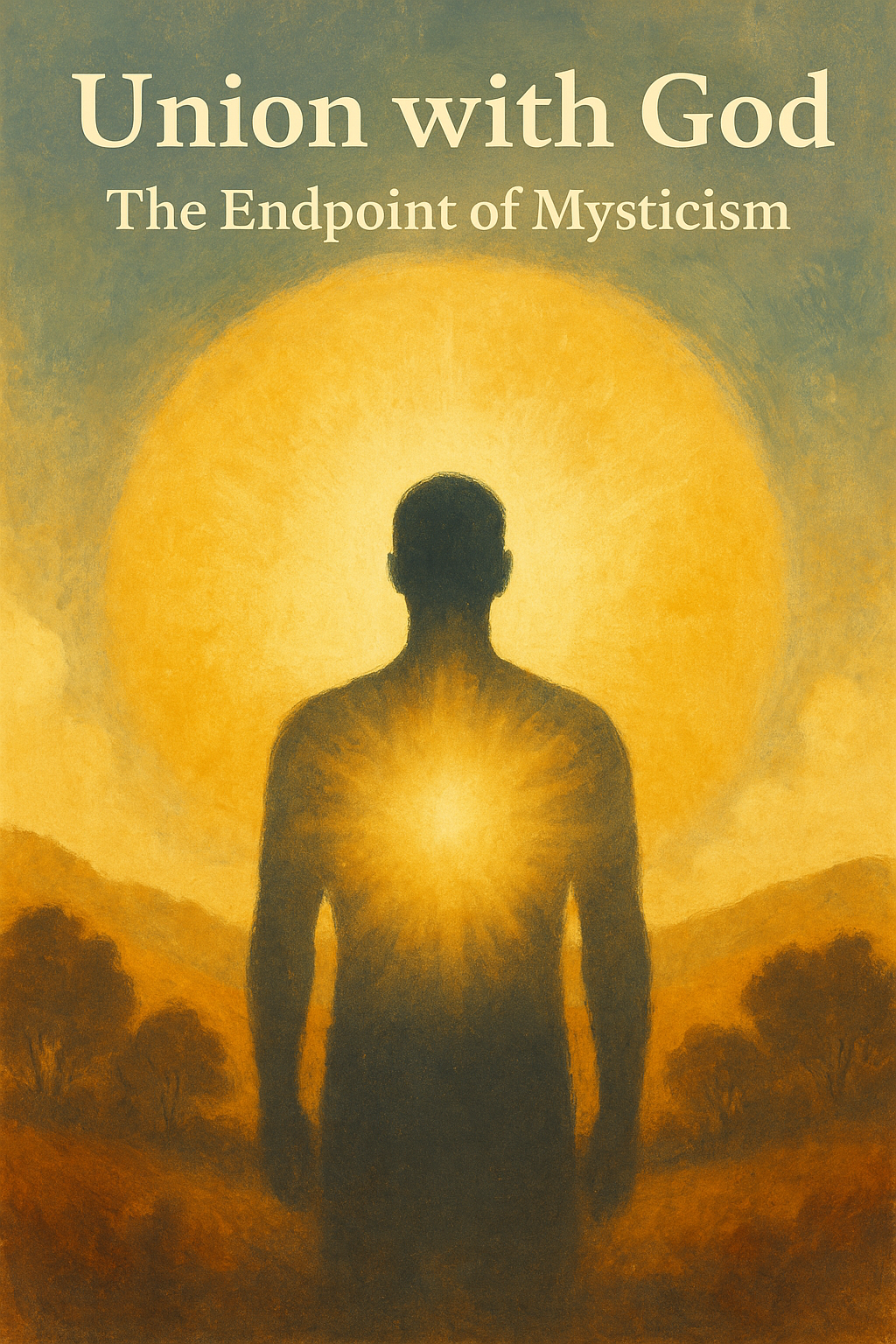
When I first heard the phrase “union with God,” I assumed it was reserved for saints, and mystics. But over the years, I’ve come to see that it is not an achievement for the few—it is the highest possibility for all God’s children. I remember sitting in silence one morning, coffee cooling beside me, when the thought came: “God is not out there, somewhere distant. God is right here, closer than my breath.” It wasn’t a theological conclusion; it was a knowing that settled deep in my bones.
This kind of union doesn’t erase my humanity—it deepens it. I still wrestle with distractions, ego, and self-will, but more and more I catch glimpses of life lived with God rather than merely for God. Moments in nature, conversations with friends, even quiet drives have become doorways into awareness that we are not separate. The mystics call this theosis—sharing in the divine nature—and it’s less about striving and more about surrender.
I’ve also learned that union with God isn’t a one-time arrival. It’s a continual deepening, an ever-closer abiding. Some days I feel that connection strongly; other days it seems hidden. But the truth remains—God is always here, and the more I live from that reality, the more love flows through me to others. This, I believe, is the true goal of the spiritual life.
Scripture
I in them and you in me—so that they may be brought to complete unity.
John 17:23
The one who joins himself to the Lord is one spirit with Him.
1 Corinthians 6:17
He has given us his very great and precious promises, so that through them you may participate in the divine nature.
2 Peter 1:4
Ancient Quotes
God became man so that man might become God.
Athanasius of Alexandria
Modern Quotes
God is not remote from us. He is at the point of our pen, our pick, our paintbrush, our needle—and our heart and our thoughts.
Pierre Teilhard de Chardin, The Divine Milieu, p. 66
The Christian mystical life consists of three stages: purification, illumination, and union… Finally comes union: the insight that God is not ‘elsewhere,’ that we are not separate from God, that we are ‘partakers of the Divine Nature.’
Carl McColman, Christian Mystics, p. 197-198
Mysticism begins when the transcendent image of God recedes and there’s a deepening sense of God as immanent, present, here, now, safe, and even within me. St Catherine of Genoa said, ‘My deepest me is God.’
Richard Rohr, Yes, and, p. 109
Whatever you do, don’t call yourself a mystic. Calling yourself a mystic would be like calling yourself a saint, or a shaman. If you really want to be such a thing, it’s far more important to live it than to just talk about it. If you are really a mystic, other people will see it. Let them call you a mystic; you don’t need to claim that name for yourself. A real saint doesn’t need PR. You simply live a saintly life.
Ken Leech
Journaling Prompts
- When have you experienced God as “closer than your breath,” not distant but present within and around you?
- In what ways can you practice surrender, rather than striving, to deepen your union with God?
- What ordinary moments (in nature, in conversation, in silence) have become doorways into awareness of God’s presence?
- How might remembering that union with God is a continual deepening—not a one-time arrival—bring you peace and patience on your journey
👉 Go deeper into this week’s theme:
Read the full Week 28 Reflection: Mysticism